
Corns (Foot Corn): Causes, Symptoms & Natural Treatment with Homoeopathy and Ayurveda
By Dr. Nirav Bhatt and Dr. Dhruti Bhatt - Dr. Bhatt's Clinic
June 4, 2026
Introduction
What Are Corns?
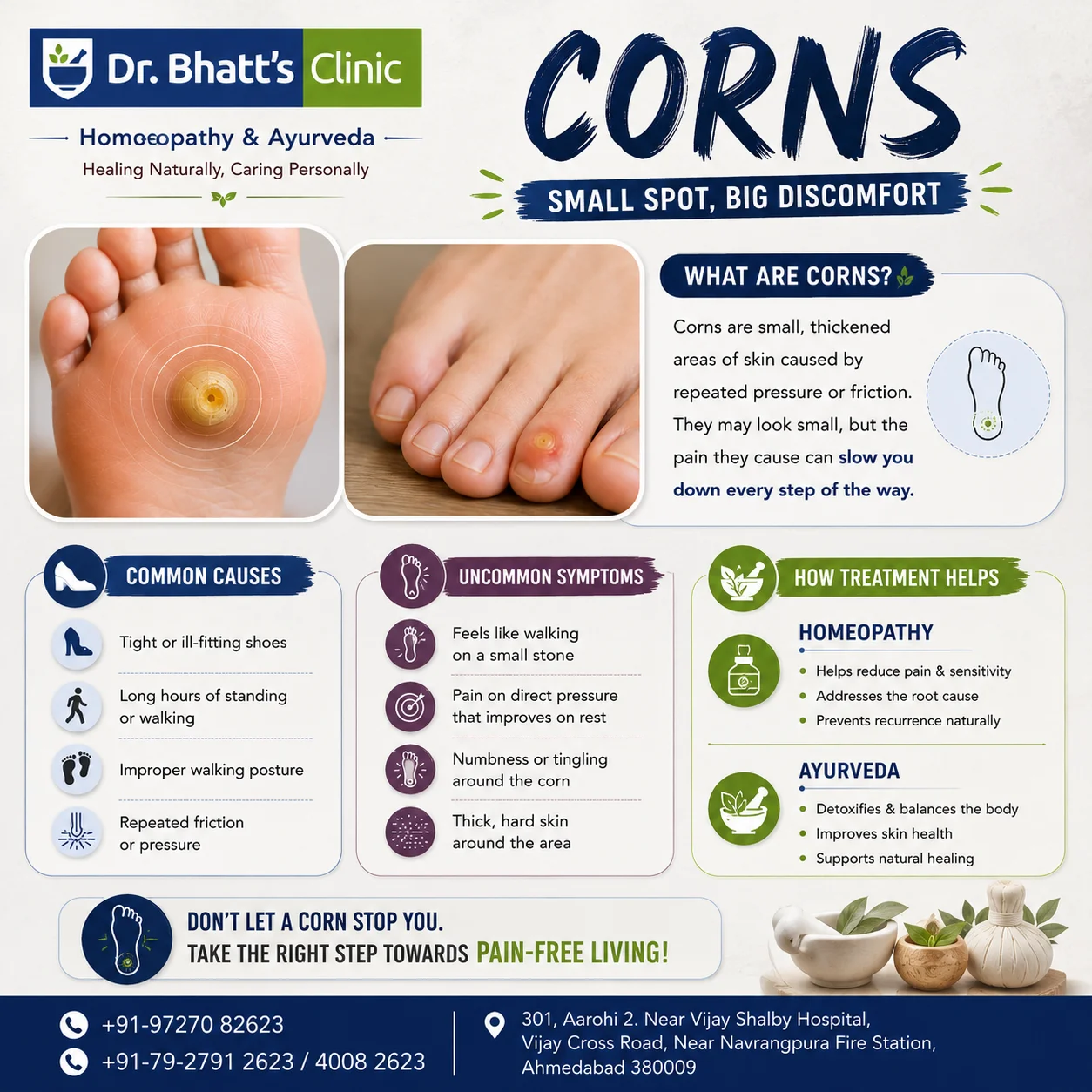
A corn (also known as clavus or heloma) is a small, thickened area of skin that develops due to repeated friction or pressure. It is the body's protective response to excessive stress on the skin, most commonly occurring on the feet and toes.
Corns may appear as:
- Hard, raised, yellowish skin
- A central core or plug
- Painful spots on pressure-bearing areas of the foot
- Tender lesions on toes or soles
Common Causes of Corns
Several factors can contribute to corn formation:
- Tight or ill-fitting footwear
- High heels or narrow shoes
- Prolonged standing or walking
- Improper walking posture or gait abnormalities
- Repeated friction and pressure on specific areas of the foot
- Foot deformities such as bunions or hammertoes
Symptoms of Corns
Besides the visible thickened skin, patients often experience:
- Pain while walking or standing
- Feeling of walking on a small stone
- Burning or sharp pain on pressure
- Thick, hard skin around the affected area
- Tenderness and sensitivity
- Occasionally numbness or tingling around the corn
Corn or Wart: Know the Difference
Many people confuse corns with plantar warts. Corns usually develop due to friction and pressure and are painful when direct pressure is applied. Warts are caused by viral infection and have different clinical characteristics. Proper diagnosis is important before starting treatment.
Why Do Corns Keep Coming Back?
Simply removing the corn does not always solve the problem. If the underlying cause—such as improper footwear, abnormal gait, or repeated pressure—is not addressed, the corn may return.
This is why a comprehensive treatment approach is essential.
Homoeopathic Approach to Corns
Homoeopathy aims to treat the individual rather than just the corn. Remedies are selected based on the patient's symptoms, skin characteristics, pain pattern, and overall constitution.
Benefits of Homoeopathic treatment:
- Non-invasive and gentle
- Helps reduce pain and sensitivity
- Addresses the tendency for recurrence
- Supports gradual softening of hardened skin
- Individualized treatment for long-term management
Commonly indicated homoeopathic medicines include:
- Antimonium Crudum
- Silicea
- Thuja
- Nitric Acid
- Hepar Sulph
However, self-medication is not recommended, as medicine selection depends on the individual case.
Ayurvedic Perspective on Corns
In Ayurveda, corns are described as Kadar. They are generally associated with imbalance of Vata and Kapha doshas, leading to thickened and painful skin lesions.
Ayurvedic management may include:
- Herbal applications
- Internal medicines
- Foot care therapies
- Lifestyle modifications
- Corrective footwear advice
Traditional Ayurvedic procedures such as Agnikarma have also been described for selected cases of corns.
Helpful Ayurvedic herbs include:
- Neem
- Turmeric
- Aloe Vera
- Kutaj
- Pomegranate extracts
Self-Care Tips for Preventing Corns
To reduce the risk of recurrence:
✔ Wear properly fitting footwear
✔ Avoid prolonged pressure on the affected area
✔ Use cushioned insoles when required
✔ Keep feet clean and moisturized
✔ Correct abnormal walking patterns if present
✔ Avoid repeated friction on pressure points
When Should You Consult a Doctor?
Seek professional evaluation if:
- Pain interferes with daily activities
- Corns repeatedly return
- There is redness, swelling, or infection
- You have diabetes or poor circulation
- Home remedies are not helping
Early treatment can prevent complications and provide faster relief.
Natural Healing at Dr. Bhatt's Clinic
At Dr. Bhatt's Clinic, we combine the wisdom of Homoeopathy and Ayurveda to provide personalized care for corn and other chronic skin conditions. Our goal is not only to relieve pain but also to address the underlying causes that contribute to recurrence.
Take the right step toward pain-free walking and healthier feet.