
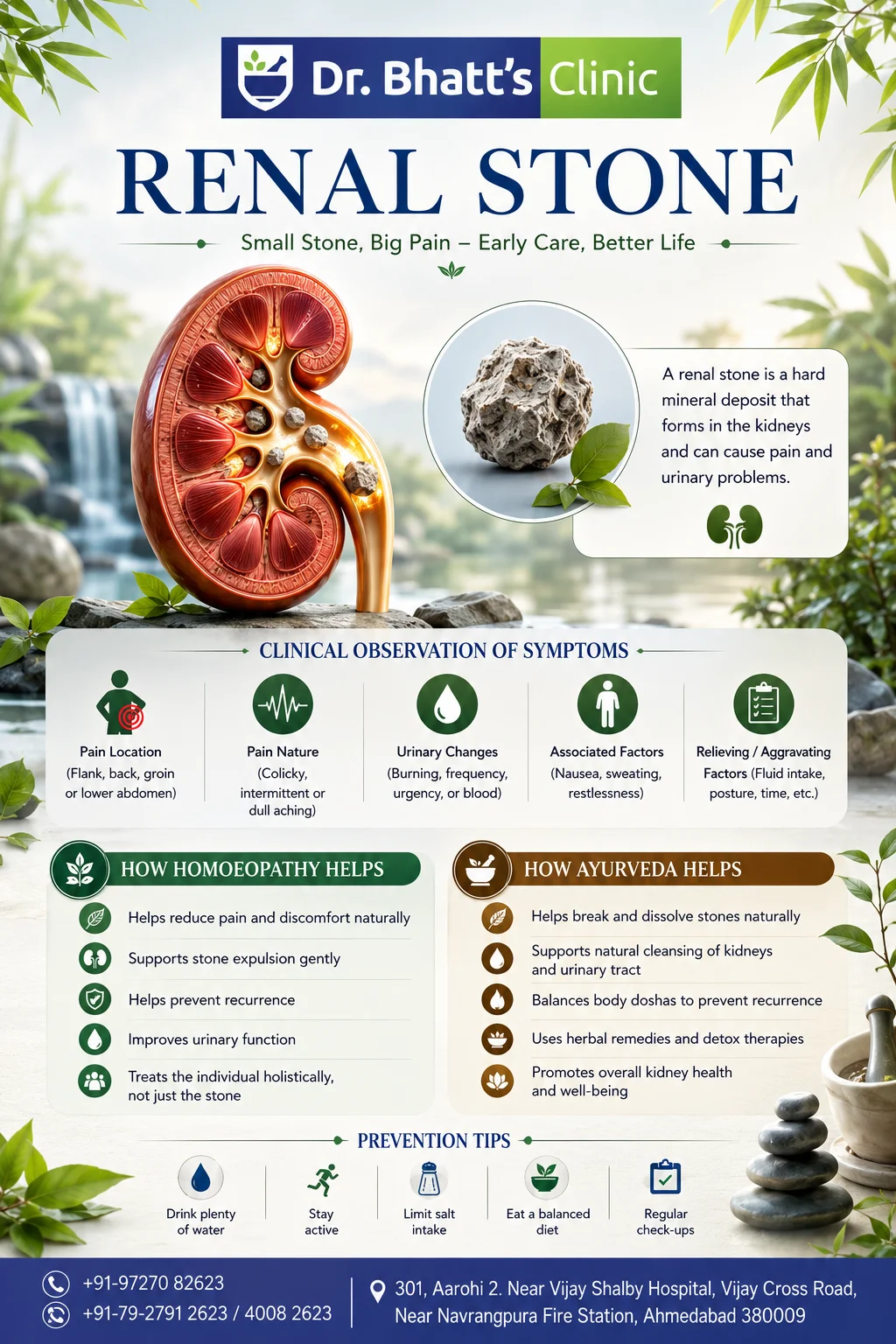
Renal Stone (Kidney Stone): A Holistic Approach through Homoeopathy & Ayurveda
By Dr. Nirav Bhatt and Dr. Dhruti Bhatt - Dr. Bhatt's Clinic
June 18, 2026
Introduction
Small Stone, Big Pain – Early Care, Better Life
Kidney stones, medically known as renal stones, are among the most painful urinary tract disorders. They occur when minerals and salts present in urine crystallize and form hard deposits inside the kidneys. While some stones pass naturally, larger stones can cause severe pain, urinary problems, and complications if left untreated.
At Dr. Bhatt's Clinic, we believe in addressing not only the stone but also the underlying causes that contribute to its formation. Through individualized Homoeopathic and Ayurvedic treatment approaches, we aim to support natural healing, reduce recurrence, and improve overall kidney health.
What Happens When a Kidney Stone Forms?
Urine contains various dissolved minerals such as calcium, oxalates, uric acid, and phosphate. Under certain conditions, these substances become highly concentrated and begin to crystallize.
Over time, these crystals stick together and form stones.
Common Risk Factors
- Inadequate water intake
- High-salt diet
- Excessive consumption of oxalate-rich foods
- Recurrent urinary tract infections
- Family history of kidney stones
- Obesity and sedentary lifestyle
- Metabolic disorders
Symptoms of Renal Stones
- Severe pain in the flank, back, lower abdomen, or groin
- Colicky or intermittent pain
- Burning sensation during urination
- Increased urinary frequency or urgency
- Blood in urine
- Nausea and vomiting
- Restlessness and sweating
Homoeopathy for Renal Stones
Understanding the Homoeopathic Approach
Homoeopathy is based on the principle of treating the individual rather than merely the disease. Every patient experiences kidney stones differently, and therefore treatment is customized according to:
- Nature and location of pain
- Urinary symptoms
- Associated digestive complaints
- Lifestyle and dietary habits
- Individual constitution
The goal is not only symptom management but also helping the body restore balance naturally and reduce the tendency for stone formation.
Objectives of Homoeopathic Treatment
1. Relief from Pain and Discomfort
Homoeopathic medicines may help reduce:
- Renal colic
- Cramping pain
- Burning urination
- Associated nausea and restlessness
2. Support Natural Stone Passage
Selected remedies may assist the body in:
- Relaxing urinary tract spasms
- Improving urinary flow
- Facilitating passage of small, non-obstructive stones
3. Reduce Recurrence
By addressing constitutional tendencies and metabolic imbalances, homoeopathy aims to decrease the likelihood of recurrent stone formation.
Commonly Used Homoeopathic Remedies
Berberis Vulgaris
One of the most frequently prescribed remedies for kidney stones.
Indications:
- Sharp radiating pain from the kidney to bladder, groin, or thighs
- Stitching or shooting pains
- Pain aggravated by movement
Lycopodium Clavatum
Often considered when symptoms are predominantly right-sided.
Indications:
- Right kidney stones
- Pain extending toward the bladder
- Associated digestive complaints such as bloating and gas
Sarsaparilla
Useful in cases where urinary discomfort is prominent.
Indications:
- Severe burning pain at the end of urination
- Passage of small gravel-like particles
- Difficulty passing urine
Important Note: Homoeopathic medicines should always be selected by a qualified practitioner after detailed case evaluation. Self-medication is not recommended.
Ayurveda for Renal Stones (Ashmari)
Understanding Ashmari
In Ayurveda, kidney stones are known as Ashmari, one of the most significant disorders of the urinary system.
According to Ayurvedic principles, kidney stones develop due to:
- Aggravation of Vata Dosha
- Accumulation of Kapha Dosha
- Formation of Ama (metabolic toxins)
When body fluids become imbalanced and toxins accumulate, minerals begin to crystallize and eventually form stones.
Ayurvedic Goals in Renal Stone Management
Ayurvedic treatment focuses on:
- Breaking down small stones naturally
- Improving urinary flow
- Cleansing the urinary tract
- Reducing inflammation
- Preventing recurrence
- Restoring doshic balance
Powerful Ayurvedic Herbs for Kidney Stones
Gokshura (Tribulus terrestris)
A renowned urinary tract tonic.
Benefits:
- Promotes urine flow
- Supports kidney function
- Helps flush out small stones
Punarnava (Boerhavia diffusa)
Known as the "Renewer."
Benefits:
- Reduces inflammation
- Supports kidney detoxification
- Helps remove metabolic waste
Varuna (Crataeva nurvala)
Traditionally used in urinary disorders.
Benefits:
- Supports breakdown of stone-forming deposits
- Promotes smoother passage of stone fragments
Kulthi (Horse Gram)
A classic Ayurvedic dietary remedy.
Benefits:
- Supports dissolution of small stones
- Helps cleanse the urinary tract
- Encourages healthy urine flow
Important Note: Any Ayurvedic medicines should always be selected by a qualified practitioner after detailed case evaluation. Self-medication is not recommended.
Natural Kidney Care Routine
Morning
✅ Drink 2 glasses of lukewarm water with fresh lemon juice.
Benefits:
- Supports hydration
- Provides natural citrate
- Helps reduce crystal formation
Mid-Morning
✅ Sip warm Kulthi water or mild Gokshura tea.
Benefits:
- Promotes healthy urine flow
- Supports urinary tract cleansing
Lunch & Dinner
Choose:
- Bottle gourd (Lauki)
- Cucumber
- Watermelon
- Pomegranate
- Mung dal
- Barley water
Avoid:
- Excessive salt
- Processed foods
- Deep-fried foods
- Heavy red meat
Evening
Drink coriander-cumin seed tea.
Benefits:
- Cools the urinary tract
- Supports healthy kidney function
- Helps maintain urinary balance
Foods to Favor vs Foods to Avoid
| Favor | Avoid |
|---|---|
| Watermelon | Spinach (excessive intake) |
| Musk Melon | Chocolate |
| Pomegranate | Excessive Nuts |
| Cucumber | High Sodium Foods |
| Bottle Gourd | Processed Snacks |
| Coconut Water | Soft Drinks |
| Buttermilk | Excessive Caffeine |
| Warm Water | Alcohol |
Prevention Tips for Kidney Stones
Drink Plenty of Water
Aim for adequate hydration throughout the day.
Stay Active
Regular exercise supports metabolism and urinary health.
Limit Salt Intake
Excess sodium increases calcium excretion.
Eat a Balanced Diet
Focus on fresh fruits, vegetables, and whole foods.
Regular Health Check-Ups
Early detection helps prevent complications.
When to Seek Immediate Medical Attention
Consult a healthcare professional urgently if you experience:
🚨 Inability to pass urine
🚨 High fever with chills
🚨 Persistent vomiting
🚨 Blood in urine
🚨 Severe uncontrolled pain
🚨 Signs of urinary infection
Large or obstructive kidney stones may require immediate medical intervention.
Final Thoughts
Kidney stones can significantly affect quality of life, but timely care and preventive measures can reduce complications and recurrence. Both Homoeopathy and Ayurveda offer holistic approaches that focus on symptom relief, supporting natural stone passage, and improving long-term kidney health.
At Dr. Bhatt's Clinic, treatment plans are personalized to each patient's constitution, symptoms, and overall health profile. Combining proper hydration, dietary modifications, and individualized natural therapies can help create an environment where kidney stones are less likely to form.
Remember: Early diagnosis and professional guidance are essential for safe and effective management of renal stones.